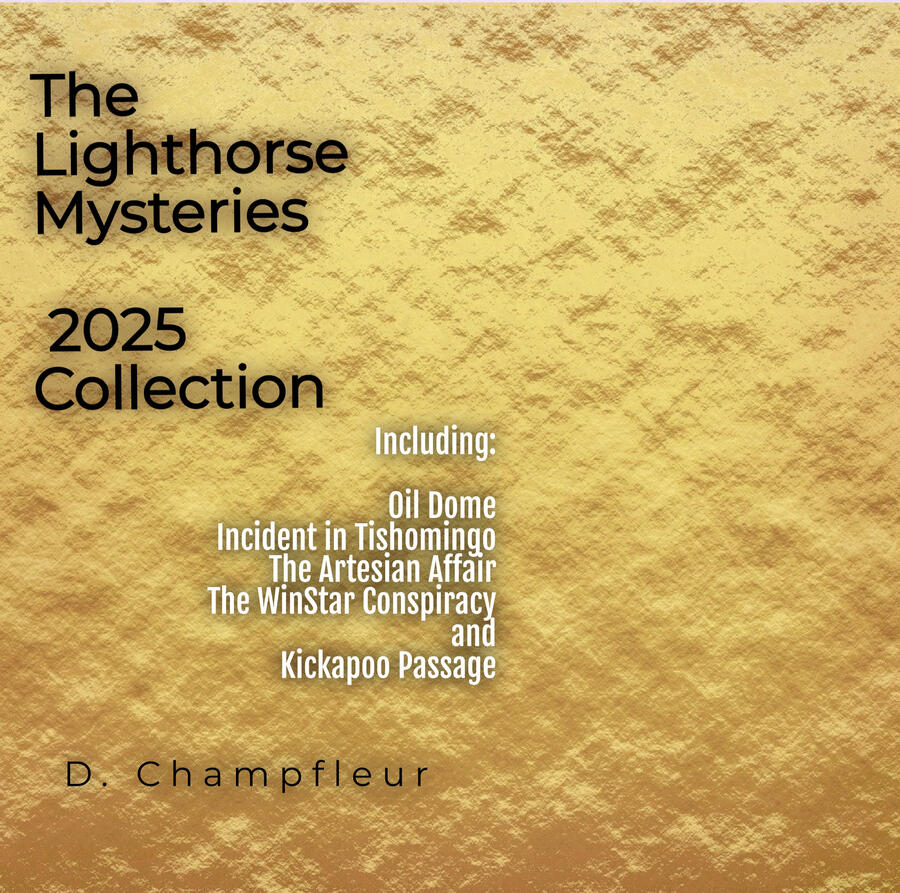
The Lighthorse Mysteriesby
D. Champfleur

The 2025 Collection brings together key investigations from the Lighthorse Mysteries in a single volume. Set in modern Indian Country, these cases move through tribal politics, financial schemes, and jurisdictional gray zones where the smallest overlooked detail can carry enormous consequences.This collection follows Officer Overton and Captain Hawk as dormant agreements, hidden land interests, and carefully concealed money trails begin to surface—drawing old alliances and new threats into the open.All books included in the collection are also available as individual novellas and are available for purchase in eBook, Paperback, and Hardcover formats on Amazon, and as Audiobooks through Audible.
The Cast of Characters
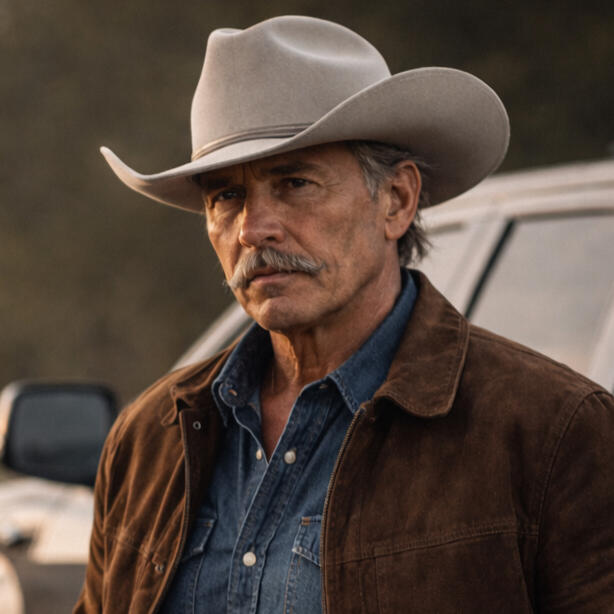
Captain Hawk - Chickasaw Lighthorse Police
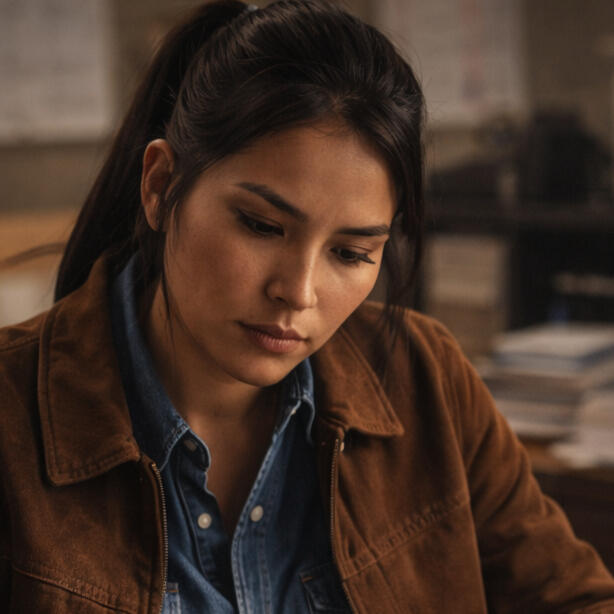
Officer Overton - Chickasaw Lighthorse Police
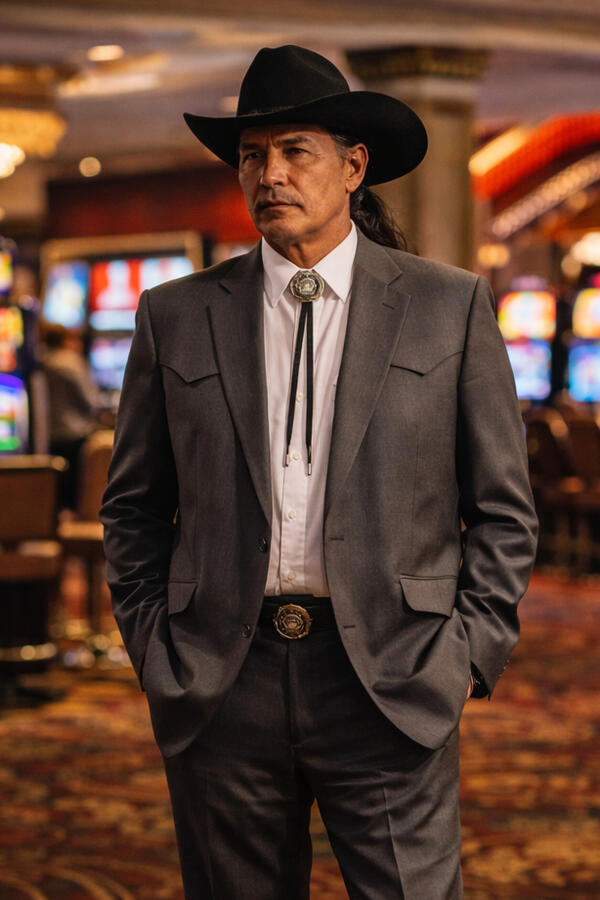
Captain Frazier - Choctaw Lighthorse Police
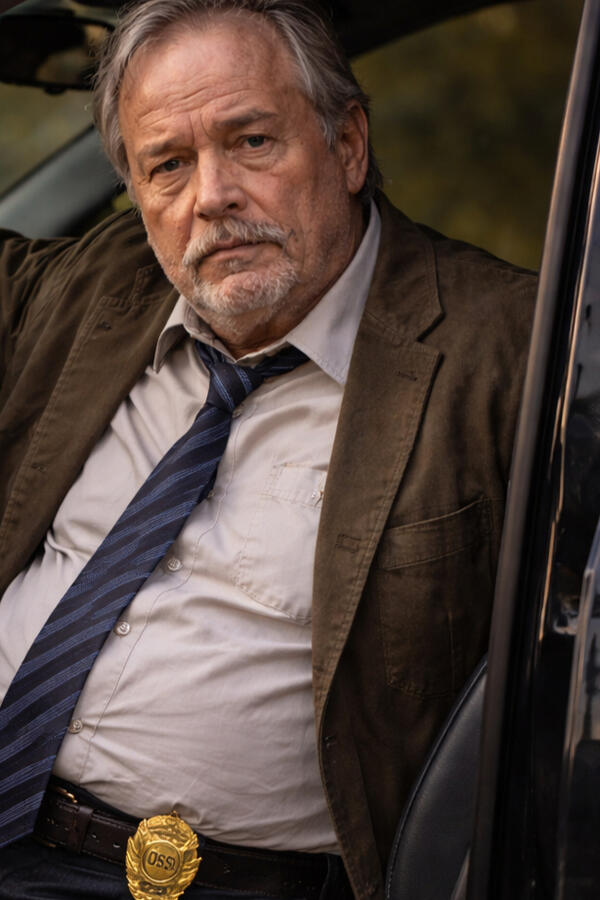
Detective Jack Hollander

Officer Betty Penny - OSBI

Elena Reyes
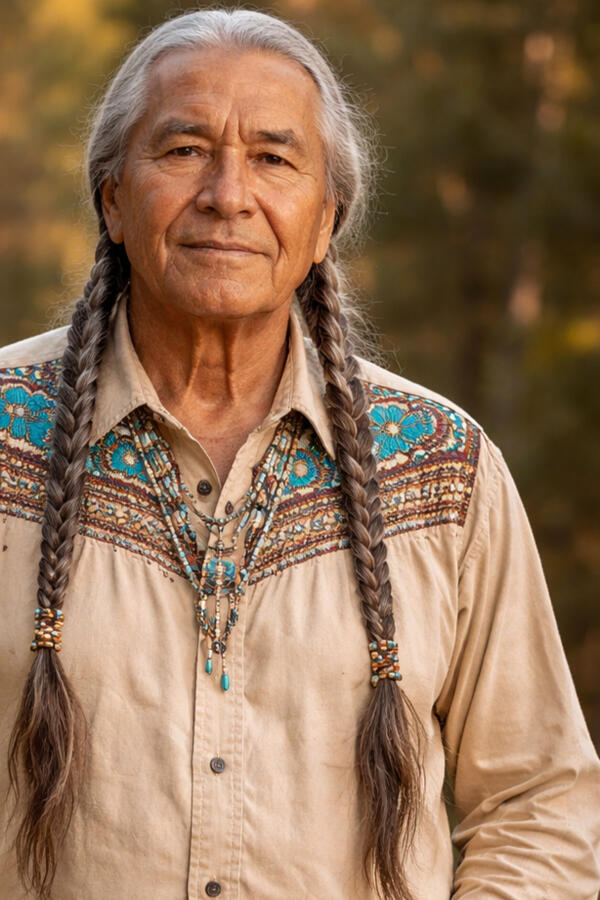
The Chairman - Kickapoo
Character Biographies
References and Resources
About the Author
The Lighthorse Mysteries are written under the pen name D. Champfleur by Leaford L. Blevins Jr., a writer with more than five decades of professional experience working within complex institutional and regulatory environments. The novels draw on real histories, legal precedents, and contemporary issues of tribal sovereignty to tell grounded, modern crime stories set in Indian Country and beyond. The novels are published under Ishkatini Studios, an independent imprint dedicated to work engaging Indigenous history, sovereignty, and contemporary social concerns.

About the Narrator
With years of experience behind the radio mic, Ken Snow understands that narration is about more than just a clear voice—it’s about connection. Known for a warm, engaging tone and a storyteller’s instinct, Ken Snow brings characters to life and keeps listeners leaning in. Whether it’s a gripping thriller or a deep dive into the unknown, their professional broadcast background ensures a high-quality, immersive audio experience from the first chapter to the closing credits."
SEASON 1
2025

Season 1, Book 1Oil Dome is a modern crime novel set in Oklahoma, where an abandoned industrial site becomes the center of a dangerous investigation. What begins as a technical evaluation quickly reveals missing records, suppressed reports, and a secret buried beneath decades of concrete and silence.When a young engineer connected to the site is found dead, the inquiry expands across state, county, and Chickasaw Lighthorse jurisdictions. As investigators follow the trail, they uncover how oil, land, and long-forgotten decisions continue to shape power in the present.Grounded in the realities of Indian Country and Oklahoma’s oil history, Oil Dome explores how value can be concealed, evidence erased, and lives lost in the effort to keep certain truths hidden. In this case, the most dangerous discovery is not what lies underground—but who is willing to kill to control it.
Season 1, Book 2Incident in Tishomingo is a crime novel set in southern Oklahoma, where a single violent event unsettles a small town shaped by history, proximity, and quiet loyalties. What first appears to be an isolated incident quickly reveals fault lines running beneath the surface—personal, political, and jurisdictional.As investigators work through guarded witnesses and overlapping authorities, the case becomes less about reconstructing events and more about understanding the forces that shaped them. In a community where relationships are long and memories run deep, truth proves difficult to separate from obligation and silence.Set in the cultural landscape of Indian Country, Incident in Tishomingo explores how justice is complicated by familiarity, tradition, and power. In a town where everyone knows everyone else, the greatest resistance comes not from violence—but from what people refuse to say.

Season 1, Book 3The Artesian Affair is a modern crime novel set in Oklahoma, where a death that appears ordinary begins to reveal a far more complex design. At the center of the case is a man who should not exist on paper and a network that relies on anonymity, money, and jurisdictional confusion to operate in plain sight.As investigators follow the trail, they move through casinos, urban corridors, and quiet offices where financial transactions replace violence as the preferred tool of control. What emerges is a carefully structured enterprise that exploits sovereignty, geography, and legal boundaries—counting on fragmentation to remain invisible.Grounded in contemporary Indian Country and the realities of post-McGirt law enforcement, The Artesian Affair examines how modern crime adapts to shifting authority. It is a story about power that flows quietly, identities that are manufactured, and the danger of assuming that legitimacy always looks respectable.
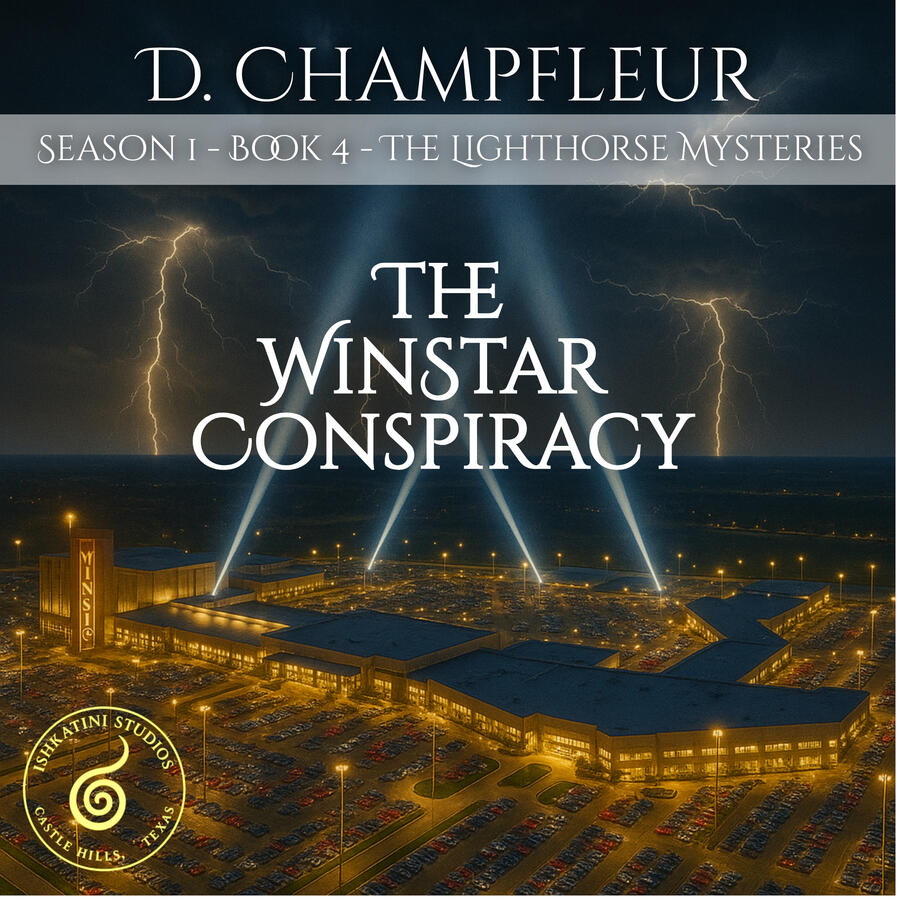
Season 1, Book 4The WinStar Conspiracy is a modern crime novel set in Oklahoma after the McGirt decision reshapes jurisdiction across half the state. As tribal, federal, and state authorities adjust to newly reaffirmed boundaries, a sophisticated financial scheme begins moving unnoticed through one of the largest casino operations in the world.When Captain Jack Hawk and investigator Overton follow irregularities tied to a federal environmental program known as Project Redwater, they uncover a network of shell companies, falsified audits, and manipulated accounting systems designed to launder millions through legitimate tribal enterprises. At the center of the operation stands the WinStar World Casino—its sheer scale making concealment not only possible, but routine.Grounded in the realities of Indian Country, The WinStar Conspiracy explores how sovereignty, when misunderstood or exploited, can become cover for corruption rather than protection. As the investigation deepens, the question is no longer who is guilty—but whether the truth can be exposed without destabilizing the very systems meant to safeguard justice.
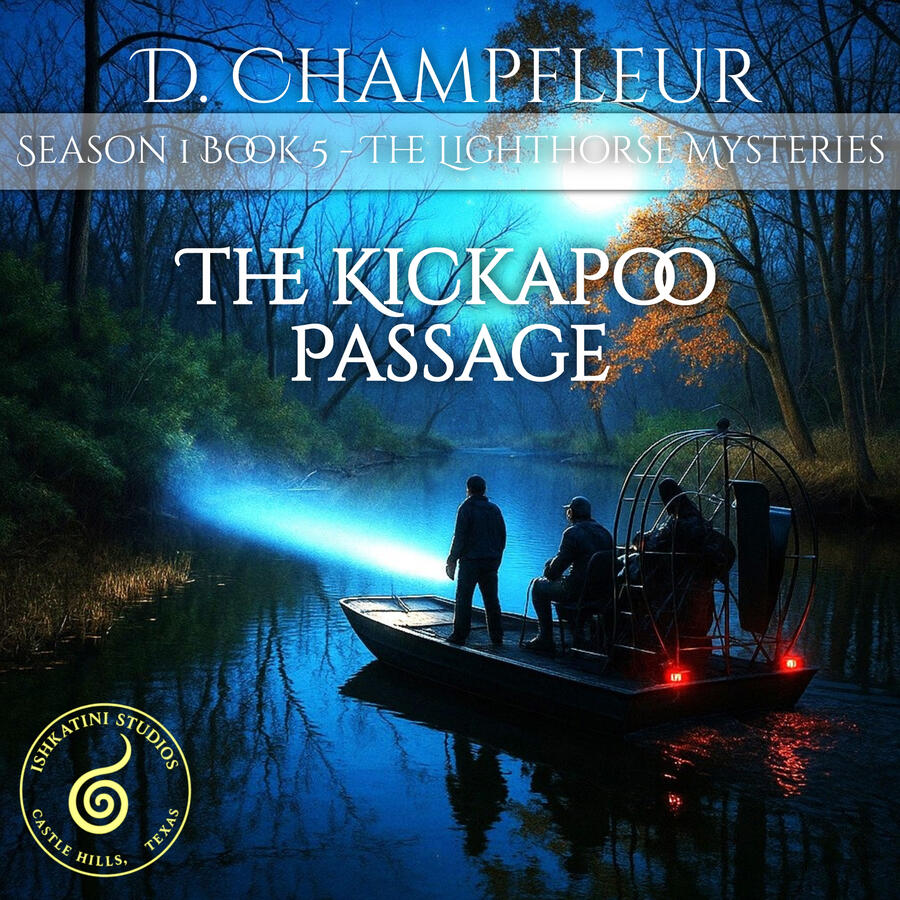
Season 1, Book 5Kickapoo Passage is a modern crime novel that begins in the aftermath of a major investigation—when the paperwork is closed, the audits are sealed, and the money is supposed to stop moving. It doesn’t.As Captain Hawk and investigators trace the quiet continuation of financial flows once tied to a casino-based conspiracy, they discover a new channel forming south of the Red River. Shell vendors appear overnight, payments replicate with mechanical precision, and public funds marked for infrastructure begin reemerging as something far darker.What started as financial fraud evolves into a system designed to exploit tribal land as transit—turning sovereignty into cover and development into a smokescreen for narcotics, violence, and corruption. The case is no longer about accounting errors, but about protecting communities whose territory is being used as a passageway for destruction.Kickapoo Passage explores what happens after justice declares victory—when the river of money keeps rising, and the real work begins.
SEASON 2
2026
Season 2 marks a decisive turn west. As Chickasaw Lighthorse investigators begin to follow the money, their pursuit leads them beyond Oklahoma and into Southern California, where tribal history, modern sovereignty, and immense capital collide.Set amid the rapid rise of tribally owned resorts in San Diego and Riverside County, these stories delve into the complex intersections of law enforcement, finance, and Indigenous self-determination. What begins as investigation becomes entanglement, as past agreements, dormant covenants, and contemporary ambition surface together.Reflecting this broader canvas, the series itself evolves. Season Two transitions from tightly focused novellas into full-length novels—deeper, more interconnected, and more consequential—matching the scale of the forces now in play.
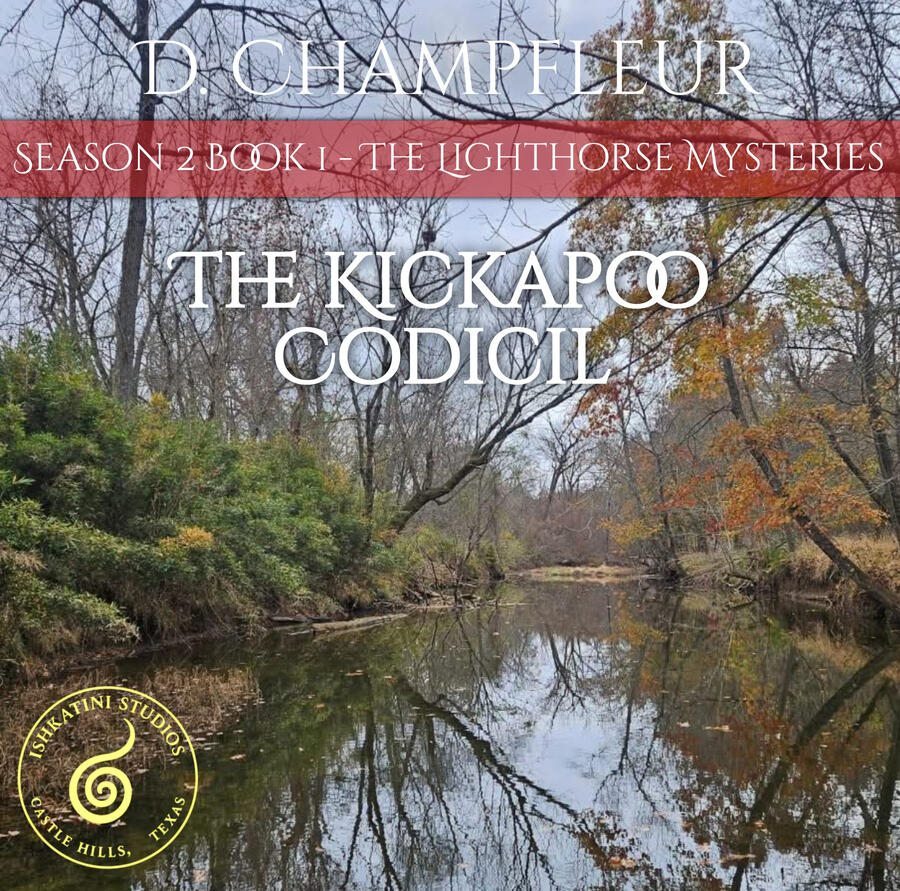
The Kickapoo CodicilSeason 2, Book 1A century-old treaty hides a clause no one was meant to notice. When Chickasaw Lighthorse investigators uncover a series of quiet, perfectly legal financial transfers, they quickly realize they are not chasing fraud—but authority. Buried deep in post–Civil War treaty language lies a forgotten codicil granting extraordinary financial autonomy to the Kickapoo Nation, a provision dormant for generations and now quietly reactivated.As the money moves west, the investigation pulls Captain Hawk and his team beyond Oklahoma and into Southern California, where shell companies, strategic land purchases, and tribal development projects begin to form a pattern that cannot be ignored. What appears lawful on paper masks a structure capable of moving vast sums beyond modern oversight—until someone decides to exploit it.Part legal thriller, part tribal history, The Kickapoo Codicil launches Season Two of the Lighthorse Mysteries, expanding the series into a deeper, more complex terrain where sovereignty, history, and ambition collide—and where stopping a crime may mean confronting a right that was never meant to be forgotten.
Soundtracks
Singles
Captain Jack Hawk HawkinsCaptain Jack Hawk Hawkins is sixty-five years old at the opening of the Lighthorse Mysteries series, a veteran lawman who has spent most of his life inside structured institutions and learned, over time, to operate just outside them. He is a Chickasaw Lighthorse Police captain by rank and reputation, promoted
after many years of steady service, though he now finds himself thinking as much about what comes after the badge as what remains within it.Hawk grew up in South Texas, born in the San Antonio Hill Country, where military service was as common as church on Sunday. The Air Force was part of the local atmosphere, and it was almost inevitable that he would be drawn toward it. He enlisted young and trained as an Air Policeman—what is now known as Air Force Security Police—serving both in the United States and overseas. Over a twenty-year enlisted career, he rose througthe ranks, eventually retiring honorably as a Chief Master Sergeant. Much of his later service involved investigative work, where patience, observation, and a reluctance to jump to conclusions served him better than force ever could.After retirement, Hawk used the GI Bill to return to school, first at the University of Texas at San Antonio, then at John Jay College of Criminal Justice in New York City, where he earned a master’s degree. That combination—long military experience followed by formal criminal justice training—made him a natural fit for the Chickasaw Lighthorse Police. He was accepted into the force without difficulty and quickly established himself as someone who noticed things others missed and was willing to follow financial trails as doggedly as physical ones.By temperament, Hawk is restrained and plainspoken. He is observant to the point of seeming quiet, stubborn when convinced he is right, and slow to offer opinions unless asked. He does not waste words, but neither is he cold. Those who work with him learn that warmth, when it appears, is deliberate and earned. He is deeply proud of being Chickasaw, not in a performative way, but as a matter of internal alignment—identity as compass rather than flag.
His personal life has been shaped by loss and responsibility. His wife died in 1989, leaving him to raise their two daughters on his own. One now lives in Southern California, the other in San Antonio, and both remain central to his sense of himself, even as distance and time have altered the daily shape of those relationships.At the beginning of the series, Hawk lives quietly in an older home in Sulphur, Oklahoma, using it as a base from which he travels for work across the Chickasaw Nation and beyond. He is paired professionally with Officer Overton, a younger investigator learning the intricacies of financial crimes, and he serves as both mentor and steady counterweight—someone who understands how systems fail because he has lived inside them long enough to recognize the warning signs.Later in the series, we meet Elena Reyes, a former Air Force colleague whose shared past with Hawk carries both familiarity and unresolved tension. Their connection is grounded in mutual competence and long memory rather than nostalgia.Captain Hawk is not a man chasing redemption or glory. He is someone who believes that work done carefully still matters, that patterns reveal themselves to those willing to wait, and that loyalty—to family, to tribe, to principle—is not a matter of rhetoric, but of daily practice.
Officer Cara OvertonOfficer Cara Overton is a young Chickasaw woman who was born and raised in Ada, Oklahoma. She attended Ada High School and later earned her undergraduate degree at East Central University, where she focused on criminology while completing a bachelor’s degree in accounting.Early in her academic career, she interned with the Chickasaw Nation headquarters, an experience that reinforced her commitment to public service and to protecting the long-term interests of her Nation rather than any short-term political or personal gain.By temperament and training, Overton stands in deliberate contrast to the two figures who most shape her professional life. Where Captain Jack Hawk Hawkins relies on instinct, lived experience, and an almost intuitive sense of human behavior, Overton is methodical, structured, and documentation-driven. She believes deeply in records, audit trails, and provable financial logic. In contrast to Betty Penny’s hard-won cynicism and battle-tested pragmatism,Overton retains a strong belief that systems can work if they are understood well enough and defended firmly enough. This combination places her in a unique position: she bridges Hawk’s streetwise judgment and Penny’s investigative realism with a younger generation’s technical fluency and ethical clarity.Recognizing her aptitude for financial analysis, the Chickasaw Lighthorse Police placed Overton on a purposeful career track aimed at financial crimes. Prior to her assignment under Captain Hawk, she spent several years on loan to the Oklahoma State Bureau of Investigation, where she received intensive, hands-on exposure to complex fraud investigations, forensic accounting methods, and multi-agency financial intelligence tools.She has completed the academic and professional preparation required to become a Certified Public Accountant, giving her a rare dual credibility in both law enforcement and formal financial analysis.Overton is currently assigned to Captain Hawk as a trainee, with a specific mandate to refine her skills as a financial analyst within the Lighthorse Police. She has grown to deeply respect Hawk’s ethics, restraint, and ability to see past surface narratives. While she initially struggled with his reliance on instinct over procedure, she has come to understand that his approach complements her own. Over time, she learns not to abandon rigor, but to recognize when numbers alone cannot tell the full story.During her OSBI assignment, Overton worked closely with Betty Penny, a seasoned investigator with a long history of unraveling financial crimes across Oklahoma. Penny became both mentor and professional sounding board, sharpening Overton’s ability to recognize patterns of deception and institutional failure. Their relationship continues beyond formal assignment, giving Overton a trusted external perspective when cases become politically or ethically complicated.Overton maintains a modest apartment in Ada, not far from her parents’ home and within the circle of friends she has known since high school and college. Except for her extended training period in Oklahoma City, she has remained closely tied to her community. She expects to spend her entire career with the Chickasaw Lighthorse Police, viewing her role not simply as employment, but as guardianship — of tribal resources, sovereignty, and future stability.
Captain FrasierCaptain Frasier is a senior officer with the Choctaw Lighthorse Police and one of the most visible representatives of the Choctaw Nation’s modern law-enforcement and security operations. His first name is rarely used, a formality that reflects both personal preference and the institutional role he occupies.
Frasier was identified early as an exceptional student while attending high school in McAlester, Oklahoma.As part of a Choctaw Nation initiative to cultivate future leadership, he participated in summer apprenticeship programs across a range of tribal enterprises and governmental activities. These early experiences provided him with a working understanding of the Nation’s economic, political, and administrative systems long before he entered law enforcement.
A proud Choctaw citizen, Frasier traces his lineage to some of the Nation’s early principal chiefs. He is deeply conscious of that heritage and regards his professional conduct as inseparable from the Nation’s public image. During his career with the Choctaw Lighthorse Police, he has witnessed the transformation of the Choctaw Nation from a comparatively modest regional presence into a multibillion-dollar enterprise operating across southeastern Oklahoma and beyond the historic travel boundaries of the Nation.Frasier is highly attentive to presentation and professionalism. He dresses impeccably and maintains a polished, outward-facing demeanor in all official settings, understanding that he is often the first point of contact between the Choctaw Nation and external governments, corporations, or agencies. His work frequently takes him abroad in connection with the Nation’s international business interests. Most recently, he has traveled to Southeast Asia and Korea to investigate matters related to Choctaw Defense, a rapidly expanding enterprise providing logistical and manufacturing support—including mobile water-supply trailers—to the U.S. Army.An intellectually disciplined investigator, Frasier approaches criminal activity through analysis rather than impulse. His overriding objective is the protection of the Choctaw Nation—its citizens, its enterprises, and its sovereignty.He has pursued advanced training in criminology and attended the John Jay College of Criminal Justice in New York City, where he met Captain Jack Hawk Hawkins of the Chickasaw Lighthorse Police. The two developed a professional friendship that has endured over the years as they have continued to collaborate on complex, cross-jurisdictional cases involving their respective Nations.Frasier has a well-known appreciation for fashion, favoring custom-tailored suits, handmade boots from Fort Worth, and Stetson hats. His refined style is a recurring point of good-natured contrast with Captain Hawk’s more utilitarian approach to dress, and the difference underscores their distinct personalities rather than any professional divide.Unmarried and socially engaged, Frasier maintains a private personal life. His deep familiarity with the Choctaw Nation’s enterprise operations, governance structure, and relationship with the State of Oklahoma makes him an invaluable asset in investigations where financial, political, and jurisdictional interests intersect. Above all, Captain Frasier serves as a careful steward of the Nation’s interests, balancing tradition, modern enterprise, and law enforcement with deliberate precision.
Detective Jack HollanderDetective Jack Hollander is a veteran investigator with the Oklahoma State Bureau of Investigation, based in Oklahoma City. A career lawman shaped more by experience than theory, Hollander brings a streetwise, deeply pragmatic approach to every case he handles.Before entering civilian law enforcement, Hollander served twenty years in the U.S. Army as an enlisted Military Policeman. Rising through the ranks to Master Sergeant, his service was marked by both advancement and setbacks. Repeated clashes with authority led to disciplinary demotions along the way, followed by hard-earned restorations of rank. The experience left him skeptical of hierarchy and deeply distrustful of institutional power—traits that later became defining strengths in investigative work.After his final Army assignment at Fort Sill in Lawton, Oklahoma, Hollander transitioned directly into civilian policing, joining the Oklahoma City Police Department. There, he honed a street-level investigative instinct grounded in observation, interrogation, and persistence rather than formal academic doctrine. As his career progressed, Hollander applied to the Oklahoma State Bureau of Investigation and, to his own surprise, was selected. He has now served with OSBI for roughly two decades.Hollander approaches investigations with a blunt, democratic worldview: he believes nearly anyone is capable of wrongdoing under the right circumstances. This perspective makes him difficult to manage within rigid bureaucratic structures, but exceptionally effective at cutting through surface narratives. He is widely respected within OSBI for his ability to resolve complex cases, including long-neglected cold cases that others have abandoned.
Physically unpolished and indifferent to appearances, Hollander is overweight and chronically neglectful of his own health. He is known to resist medical oversight and administrative scrutiny with equal stubbornness, preferring autonomy over accommodation.He lives alone in Del City, Oklahoma, in a modest, slightly worn home that reflects his utilitarian approach to life. Having been through multiple marriages, Hollander avoids permanent personal entanglements and values independence above comfort. Outside of work, he is a regular at the Del City VFW, where he maintains close ties to the veteran community and finds a measure of belonging without expectation.Though often abrasive and openly skeptical of authority, Detective Jack Hollander remains one of OSBI’s most capable investigators—a man whose flaws and effectiveness are inseparable, and whose presence often signals that a case has reached a level where truth matters more than convenience.
Officer Betty PennyOfficer Betty Penny is a senior investigator with the Oklahoma State Bureau of Investigation, specializing in financial crimes. At approximately forty-five years old, she is one of OSBI’s most experienced and effective analysts of complex fraud, corruption, and money-driven criminal activity.Penny began her law-enforcement career with the Oklahoma City Police Department, joining straight out of high school after graduating from Classen High School in Oklahoma City. Starting on patrol, she developed a strong street-level foundation before steadily advancing into investigative work. While working full time, she attended night classes at Oklahoma City University, earning a degree in accounting.She later completed the academic and professional requirements necessary to qualify for Certified Public Accountant credentials, though she has no interest in practicing as a CPA. Instead, she applies that training directly to criminal investigations, where financial fluency often proves decisive.Within OSBI, Penny is known for her methodical yet highly personable investigative style. She is charismatic without being deferential, precise without being rigid, and unafraid to state her conclusions plainly. She is frequently partnered with Detective Jack Hollander, a pairing that works precisely because it is combustible. Penny is keenly aware of Hollander’s misogynistic tendencies and resists any implication that she serves as an assistant rather than an equal. When assigned together, she drives the Tahoe and Hollander rides shotgun—a detail he appreciates more than he admits. Penny, however, is firm in establishing that she is not his helper, but an independent authority in her own right.Penny also serves as a mentor to Officer Cara Overton and takes that role seriously. She actively trains Overton in financial investigation techniques, institutional navigation, and the practical realities of working sensitive cases. Penny sees Overton not as a subordinate, but as an investment in the future strength of the investigative unit.Like Hollander, Penny is skeptical of authority and dismissive of political sensitivities. She is unconcerned with whose influence might be disrupted by an investigation and regards discomfort among powerful figures as an occupational side effect rather than a problem. This blunt independence has caused friction within institutional hierarchies, but it has also made her indispensable.
Her personal life is deliberately uncomplicated. Penny has been married three times and divorced three times, and she has no intention of entering another long-term domestic arrangement.She believes emotional entanglements interfere with professional clarity and prefers independence over stability. Though attractive and observant, she keeps personal attractions at a distance. She is aware of her attraction to Captain Hawk, but does not act on it—choosing instead to watch, evaluate, and remain professionally contained.Officer Betty Penny is respected, occasionally feared, and rarely underestimated. She brings intellect, confidence, and unfiltered honesty into every investigation, and her presence usually signals that a case has reached the point where surface explanations are no longer sufficient.
Elena ReyesElena Reyes is a long‑time associate and trusted friend of Captain Jack Hawk Hawkins, though she holds no formal position within any law‑enforcement agency. Her role in the series emerges organically from personal history, regional knowledge, and a quiet competence that proves invaluable when investigations move into Southern California’s complex tribal landscape.Born and raised in Southern California, Elena is of Mexican‑American descent and maintains deep social and cultural ties throughout the region. She first met Hawk during their service in the U.S. Air Force, where both were assigned to Security Police duties at a base in Germany. At the time,Elena was a trainee under Hawk’s supervision, and the two shared a brief, semi‑romantic relationship shaped by proximity, long hours, and the intensity of overseas service. Their relationship ended amicably when assignments changed, years before Hawk’s first marriage, and evolved into a lasting friendship built on mutual respect.After leaving the Air Force, Elena returned to Southern California, where she has lived ever since. She later married a man involved in tribal government in San Diego County, a relationship that provided her with firsthand exposure to the structure, politics, and interpersonal dynamics of Southern California tribal authorities. Although that marriage has since ended, the relationships and trust she developed during that period endure. Through those connections, Elena retains entrée into tribal meetings, cultural gatherings, and community events—access that becomes critical when Hawk’s work draws him into the region.Elena lives aboard her boat at Crown Isle Marina and has embraced the boat‑centered lifestyle for many years. Comfortable on the water and highly self‑reliant, she is an accomplished pilot of her vessel and recommended a neighboring slip when Hawk needed a temporary home during his Southern California assignment. While there is no romantic relationship between them, she provides practical support, regional insight, and steady companionship during demanding investigations.Action‑oriented and independent, Elena enjoys firearms and maintains membership in a local gun club, where she regularly trains with her collection of handguns. She also enjoys horseback riding and remains physically active. Following high school, she attended a state university in Southern California and earned undergraduate credentials as a nurse. Though she never practiced professionally, she regards the training as a personal safety net—skills carried quietly rather than advertised.Elena Reyes is observant, capable, and grounded. She serves as a bridge between Hawk and the intricate web of Southern California tribal relationships, offering perspective and access that cannot be obtained through official channels alone. Her presence adds depth, continuity, and regional authenticity to the series as it expands beyond Oklahoma.
The Chairman — Kickapoo Traditional Tribe of TexasThe Chairman of the Kickapoo Traditional Tribe of Texas is an elder statesman whose authority rests on continuity, memory, and an unusually deep command of tribal and federal law. Though his personal name is never publicly emphasized, his role as chairman places him at the center of one of the most legally and politically distinctive tribal entities in the United States.The Kickapoo Traditional Tribe of Texas occupies a singular position among Native nations. Its people maintain a binational existence, with members holding citizenship in both the United States and Mexico. This arrangement is rooted in late‑nineteenth‑century removal policies and a complex sequence of treaties and federal obligations that recognized the tribe as a single people moving across an international border. Over time, that historic unity evolved into two closely related but administratively distinct communities—one in Texas and one in Oklahoma.The Chairman possesses an exceptional understanding of these treaty foundations and the federal commitments that continue to govern the Tribe’s sovereignty. He has witnessed the transformation of the Texas Kickapoo from a small, vulnerable community shaped by displacement into a powerful and affluent tribal nation. Central to that transformation has been the Tribe’s development of a major casino enterprise near Eagle Pass, Texas—one of the very few tribal gaming operations permitted within the state. As chairman, he oversees this enterprise and the broader economic framework that sustains tribal independence.He maintains close and cooperative relationships with the leadership of the Kickapoo Tribe in Oklahoma, reflecting the enduring family ties that connect citizens across state and national boundaries. His familiarity extends as well to the Chickasaw and Choctaw Nations, whose citizens share kinship networks and overlapping jurisdictional interests with the Kickapoo people. These relationships allow him to navigate intertribal matters with diplomacy and long historical perspective.Though little is publicly known about his private life, the Chairman’s professional preparation is evident. He is deeply versed in tribal law and has pursued advanced legal education to support his responsibilities, including formal legal training through the University of Oklahoma’s tribal law programs and the completion of a law degree. This combination of traditional knowledge and modern legal expertise enables him to protect the Tribe’s interests in dealings with federal agencies, the State of Texas, and international authorities.Measured, deliberate, and quietly authoritative, the Chairman serves as both steward and strategist. His presence in the series underscores the enduring power of treaty law, memory, and sovereignty—and the reality that modern tribal enterprises rest on obligations negotiated generations ago and still fiercely defended today.
Jurisdiction, Tribal Sovereignty, and Law EnforcementModern law enforcement in Oklahoma operates within a complex framework shaped by tribal sovereignty, federal law, and historic treaty obligations. Several key court decisions over the past decade—particularly since 2020—have clarified how criminal jurisdiction applies within Indian Country. The Lighthorse Mysteries series is informed by this real-world legal landscape.McGirt v. Oklahoma (2020)
In McGirt v. Oklahoma, the United States Supreme Court held that Congress never formally disestablished the Muscogee (Creek) Nation’s reservation. As a result, crimes involving Native American defendants or victims committed within those boundaries fall under federal and tribal jurisdiction, not state authority.The Court’s ruling reaffirmed that treaty promises remain legally binding unless Congress explicitly removes them.Extension to Other Oklahoma Tribal Nations Following McGirt, the Oklahoma Court of Criminal Appeals applied the same legal analysis to other historic reservations in eastern Oklahoma. Courts confirmed that the reservations of the Chickasaw, Choctaw, Cherokee, and Seminole Nations also remain legally intact for purposes of federal criminal law. Together, these decisions restored a jurisdictional structure that had existed on paper for more than a century but had often been ignored in practice.Limits on Retroactive Challenges
In Matloff v. Wallace (2021), the Oklahoma Court of Criminal Appeals limited the retroactive application of McGirt in state post-conviction proceedings. While McGirt applies to cases still on direct appeal at the time of the decision, it does not reopen most long-final state convictions.This ruling significantly narrowed the scope of McGirt’s impact on past cases while leaving its prospective effects intact.Concurrent State Jurisdiction Clarified In Oklahoma v. Castro-Huerta (2022), the United States Supreme Court held that states have concurrent jurisdiction to prosecute non-Indian defendants who commit crimes against Indian victims in Indian Country.This decision clarified that federal jurisdiction in such cases is not exclusive, and that state authority may also apply. Castro-Huerta reshaped assumptions about the limits of state power following McGirt.Tribal Police Authority on Reservation Lands In United States v. Cooley (2021), the Supreme Court unanimously confirmed that tribal police officers may stop, detain, and investigate non-Indians on public roads within reservation boundaries when they reasonably suspect violations of state or federal law.This decision reinforced the practical authority of tribal law enforcement to act in real time to protect public safety, even when ultimate prosecution may occur in federal or state courts.Reservation Status Is Not Universal
Subsequent cases have also made clear that not every historic reservation claim succeeds. Courts have held that some reservations—such as the historic Kickapoo Reservation in Oklahoma—were disestablished through congressional action. Each tribe’s jurisdictional status depends on its specific treaties and statutory history.Why This Matters to the Lighthorse Mysteries The modern legal environment in Oklahoma reflects overlapping sovereignties rather than a single controlling authority. Tribal citizenship, land status, treaty obligations, and the identity of victims and defendants all influence how criminal cases are investigated and prosecuted.The Lighthorse Mysteries series draws on this reality, using jurisdiction not as background detail, but as an active force shaping law enforcement decisions, interagency cooperation, and the paths criminals exploit.
The Kickapoo Traditional Tribe of Texas: History and SovereigntyThe Kickapoo Traditional Tribe of Texas occupies one of the most distinctive legal and historical positions of any Native nation in the United States. Its present-day status is the result of nineteenth-century removal policies, cross-border survival strategies, and federal decisions that treated the Kickapoo people as a community moving between nations rather than a tribe confined to a single reservation.Origins and Cross-Border Movement
During the nineteenth century, repeated pressures from U.S. expansion and state authorities forced many Kickapoo people to move south from the Midwest and Great Plains. Unlike many tribes that were removed to fixed reservations, the Kickapoo developed a pattern of migration between what is now the United States and Mexico.This movement functioned as a survival strategy and, at various times, was recognized by federal authorities.Over time, Kickapoo communities came to exist on both sides of the international border, maintaining kinship, governance, and cultural continuity despite changing national boundaries. The border divided an existing people rather than creating separate ones.A Binational Tribal Community
Today, the Kickapoo Traditional Tribe of Texas is part of a broader Kickapoo community that includes tribal citizens in Texas, Oklahoma, and Mexico. Many families maintain ties across these regions, and cross-border movement remains a longstanding tradition.The Texas Kickapoo are recognized as a binational people, with members holding either United States or Mexican citizenship. In some cases, special cross-border movement rights reflect historic agreements and the practical realities of a community that predates the international boundary.
Federal Recognition and Sovereignty in TexasThe Kickapoo Traditional Tribe of Texas holds federal recognition and exercises tribal sovereignty within the State of Texas, a jurisdiction where tribal self-governance and gaming are otherwise highly restricted. As a result of its unique history and federal agreements, the Tribe is one of only two Native nations permitted to operate a casino in Texas, the other being the Alabama-Coushatta Tribe.The Kickapoo Lucky Eagle Casino near Eagle Pass is not merely a commercial enterprise, but a primary means of sustaining tribal sovereignty. Revenue from the enterprise supports social services, governance, and economic stability for tribal citizens whose community once faced continual displacement.
Relationships with Oklahoma and Other Tribal NationsAlthough courts later determined that the historic Kickapoo Reservation in Oklahoma was disestablished, the Texas and Oklahoma Kickapoo communities maintain close relationships rooted in shared history and family ties. Tribal citizens continue to travel between the two regions, and leadership maintains ongoing communication.
Southern California Tribal Nations: A Distinct Legal and Political LandscapeTribal nations in Southern California occupy a legal, political, and economic landscape that differs markedly from those of tribal nations in Oklahoma and Texas. These differences are rooted in history, geography, and state policy, and they shape how authority, influence, and law enforcement function across the region.Fragmented Land Bases
Unlike the large, continuous reservations found in Oklahoma, many Southern California tribal reservations consist of small, fragmented, or non-contiguous parcels of land. In some cases, reservations are interwoven with cities, counties, private property, and public infrastructure.This “checkerboard” geography complicates jurisdiction and often requires negotiation and coordination rather than straightforward enforcement.As a result, authority in Southern California tribal areas is frequently situational. Law enforcement, regulatory oversight, and access often depend on specific agreements and relationships rather than broad territorial control.State–Tribal Compacts and Negotiated Authority
California’s relationship with tribal nations is heavily shaped by negotiated compacts, particularly in the area of gaming. These agreements define the scope of tribal gaming operations and establish ongoing relationships between tribal governments and the State of California.Compacts have created systems in which sovereignty is exercised alongside constant interaction with state agencies, regulators, and political institutions. Tribal authority in Southern California is therefore often expressed through negotiation, leverage, and contractual arrangements rather than through exclusive jurisdiction.Concentrated Economic Power and Disparity
Southern California is home to some of the most economically powerful tribal enterprises in the United States, particularly casino operations located near major population centers. These enterprises generate significant revenue and confer substantial political and social influence.At the same time, not all tribes in the region benefit equally. Economic disparity among tribal nations is pronounced, with some tribes possessing vast resources and others remaining small and vulnerable. This imbalance shapes intertribal dynamics and influences how power is exercised behind the scenes.Entanglement with Local Governments
Because of dense population and limited land, Southern California tribal nations interact extensively with counties, municipalities, water districts, and regional planning authorities. Issues such as infrastructure, utilities, environmental regulation, and development are often negotiated rather than imposed.



Coming Soon
Coming Soon